“If you’re a woman and you’re bossy, then you’re a b****h, but if you’re a man and you’re bossy, then you’ve got rizz.” This is how my debate coach started her lecture on feminism and sexism.
Everyone’s talking about feminism — and on the surface, the rise of feminism has been empowering women, with many people no longer viewing them as damsels in distress and instead seeing them as a powerful community filled with people who have voices and are not afraid of using them. But looking beyond the surface, the “feminism” that many people are vouching for is out of touch with the interpretation that women would truly want for themselves. Even in Hollywood, major companies like Disney are creating “strong female leads” for their movies that are supposed to represent feminism, but it eventually leads to them losing revenue because even women feel misrepresented within these movies.
For example, the movie “Charlie’s Angels,” a reboot of the famous TV series, faced major criticism despite having a “perfect feminist reboot,” with three women as leads, doing action scenes, and saving the world. This movie ended up getting negative reviews because people felt that instead of naturally integrating themes of empowerment within this movie, with these characters literally fist fighting men in this movie or being the one pulling the trigger on a gun, the plotline revolved around the “women are strong and can do anything” premise.
Regardless, the Hollywood industry tried to spin this narrative around and claim that “men just can’t support women” and argued that the reason that movies revolving around feminism fail is that people are “inherently misogynistic.” This claim was ultimately invalid because even women, who were supposed to “feel represented” by these narratives, are speaking out and saying that these stereotypes are not the true feminist values that they support.
“It’s the worst thing ever when you open a script and you read the words ‘strong female lead.’ Those roles are incredibly stoic, you spend the whole time acting tough and saying tough things,” actress Emily Blunt said in an interview with Variety.
How can society or Hollywood argue that the reason why these films or narratives are failing is that people are misogynistic when even women themselves do not want to support these stereotypes?
Notably, the movie “Legally Blonde,” a movie aired more than two decades ago, is being celebrated now by women for being a good depiction of feminism, with the main character, Elle Woods, originally going to Harvard Law School to get back with her ex-boyfriend but eventually realizing that pursuing a career in law is more meaningful than pursuing her previous relationship. At the end of the movie, she ends up graduating from Harvard, landing a prestigious job.
Women supported this movie because it broke the “dumb blonde” stereotype, by proving that intelligence is not bound by one’s looks, but more importantly, by embracing her femininity rather than rejecting it, Elle shows that feminine aspects such as caring about fashion or makeup can coexist with ambition, intelligence, and strength, which is how this movie encouraged women not to feel pressured to conform to a single, narrow concept of what feminists should look or act like.
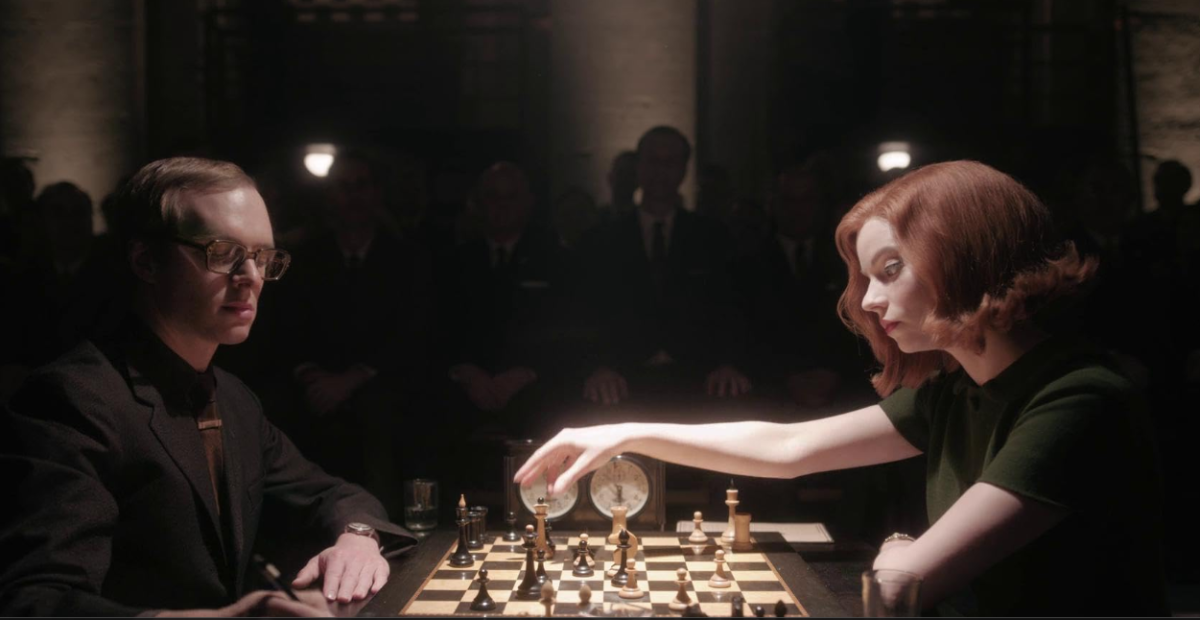
A more recent example of a good depiction of feminism would be Beth Harmon in “The Queen’s Gambit,” where Beth, the main character, succeeded in chess in the 1960s, a male-dominated field at this time, while challenging gender stereotypes. This series does not revolve around feminism, but still manages to have her gender emphasized. In response to a reporter’s question about accusations of Harmon being “too glamorous to be a serious chess player,” she responds, “I would say that it’s much easier to play chess without the burden of an Adam’s apple.”
This show avoids portraying her as a typical “tomboy” or someone who needs to act like a man to succeed, proving that women can both be intelligent and feminine.
When the pendulum swings, it rarely lands in the middle. Women were characterized to be passive and silent in the past, but now anyone who is a “feminist” has to be strong and has to be able to hold their own in a fist fight. And while critics say that just because misrepresentation exists, that doesn’t mean feminism is ruined, can that really be said when society is force-feeding this misrepresentation down everyone’s throats? When misrepresentation is the main source of the narrative circling around, it is not invalid to claim that a social movement is going to lose momentum.
“When it comes to stereotypes about leaders, they tend to fall into the masculine category. For men, it’s nice to be likeable, but there’s a lot more leeway for a man than a woman to be likable and be tough,” Chris Wofford said in a Cornell University article.
By supporting “choice feminism,” where all women are accepted, regardless of their opinions on dressing based on their gender, or emphasizing it, women will be able to voice their opinions freely, leading to women being more supportive of feminism as well.
Society can support feminists by slowly giving them the narrative that they have been protesting for all these years, supporting women in the workforce, and allowing them to voice their opinions without being labeled as a “b****h” while men are supported for the same actions. Our society can only begin to achieve progress when both women and men are given the representation they truly want.